
Showing posts with label Black community. Show all posts
Showing posts with label Black community. Show all posts
16 September 2014
On Spanking, Pathologizing White Violence and Using Common Sense

29 January 2014
Habla Ifa, On NonViolence: Avonte Oquendo and Oshun's East River Speak - Part IV
*originally posted by Jadele McPherson, a writer, performer and activist whom I'm proud to call my sister. Reposted with permission and slight edits by myself

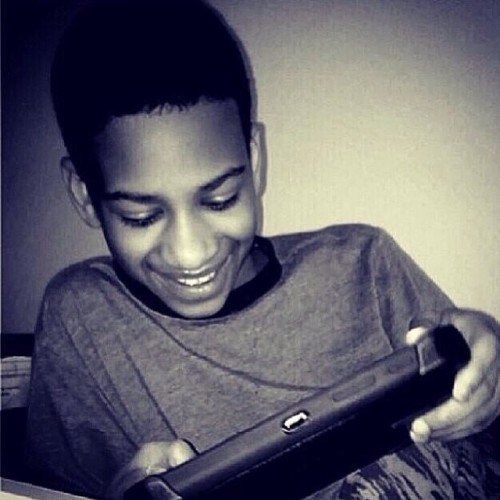
Part IV: Oquendo in Da River Lord: Oshun, Mori Yeye O, Medicine, Mirror and Healer
Oshun is sweet yet she is terrifying, the rivers waters are often murky and hide exotic creatures altered by human toxic wastes and other mutations our collective lifestyles cause, poisoning the very natural entities that sustain us. Like grandma used to say "So smart to be so stupid". I cry for Avonte Oquendo today and the countless others who have been washed away limb by limb, piece by piece unaccounted for, and I praise and lift up his family in this time for not allowing him to go unnoticed. I hope we can stand to look at this broken mirror of our education system to be accountable in letting our institutions deteriorate to this level.
Most of all I hope the swiftness of her waves do not stop us in dreaming of a better world, of a better place for those we are creating when we go away from this crazy violent mess of America. I hope we do not curl in our comfort of suburban homes and well off communities that are "safe" and find the ways to exist in multiple spaces. As we gain access to the forbidden fruits that we keep close pace with the strife of the ghettos even for those who did not grow up there, it is okay to be middle class and grow up with the privileges still denied to so many black children - but to ignore one another because "I did the work," and "you did not" is just no longer acceptable.
How can we create alumni associations that do not mirror those of whites, only commemorating holidays and reunions; how do we create orgs that look like we do, though after we leave elite spaces for the professional world we are riddled with tests our white peers do not have to pass? Can we play Earth, Wind and Fire and James Brown at our college reunions to stir our most creative talents that required us to be better than all the whites that we had to pretend we were equal with in those walls of elistist education some 50+ years after Brown v. Board of Ed? How do we agitate to promote the legacy of non-violence in a world of stop and frisk, Trayvon Martin and Avonte Oquendo? A world in where if you are young and black your life is shot down at 19 or run down to the river in fear and terror when you supposed to be taking notes from a Smartboard. How do we clear the chaos with enough anger to fuel us to bind together, but not too much that it consumes us and drives us crazy? How do we love one another unconditionally to the point where it changes our lives and our lifestyles, where others children are our children and white children do hold the hands of black children, where all of Gods children are bound by Let Freedom Ring to continue drowning out the racists of Alabama and Mississippi Godd@!% How do we remix that message with the innovation we've carried from rumba to hip-hop to dare to care enough for one another that we don't care if we lose $250 of pay because we are worth more? Yes. I have more than a dream.
Ay Sea Santisimo, I have a vision, a divine glimpse of an exercise room and no fences around my school's courtyard, with courses on the connections between West African to Hip-Hop Dance and Afro-Latino history is taught trilingually with all students passing their classes. Where not just white Waldorf children are greeted with a "Hi, welcome today Johnny" but where instead of metal detectors, hot cafe con leche y pastelitos de guyaba y queso are warm and ready for my 2nd and 3rd period class as students barge through the doors practically breaking them down to learn, to seek truth, to seek faith to love we educators as much as they love their own beautiful golden brown to milk chocolate and black pearl complexions. A dream of telling the history of our peoples survival, where every hand shoots up when I ask "How long did the Transatlantic Slave Trade last?" and "What was the last country that abolished slavery?" And we eat lunch in our solar powered, organic food growing, rooftop garden and grocery store, where all owners are black folks and Dominican folks and Boricua, Nigerian, Panamanian, Honduran babies, beautiful children of light, well nourished and listos pa la batalla, understanding how we are one despite our nuances and differences, I have a vision that I know will not fail me, it did not fail my bis bis abuela when I walked through the gates of many buildings that I was never supposed to step foot in from Harvard to Broadway theaters, and yet here I am, well fed and a little overweight, bright and brilliant in love and truth, machete en la mano just like the maroons who birthed me.
I am the Dream, and I dare you to try and prove me wrong, my truth sings free 200 years from now and I know how to swoop down and see it all in pure spirit from the secrets running through this blood while the rest of y'all stuck in boxes 6 feet under. Can't nobody oppress me enough to own my spirit and so for freedom I'm patient, yeah, patiently I'll wait. And I thank my students for being the ones to break this news to me, you all give me so much hope.
Y.E.A.H. (Young, Educated, {of} African Heritage)
For Avonte and our youth, in love and solidarity
Jadele.
Thank you to my sister Jadele for allowing me to repost her words. It's a strong testament both to Avonte's life and to our spirit as a community of African heritage. Ashe.
28 January 2014
Habla Ifa, On NonViolence: Avonte Oquendo and Oshun's East River Speak - Part III
*originally posted by Jadele McPherson, a writer, performer and activist whom I'm proud to call my sister. Reposted with permission and slight edits by myself

Accountability. Genuine, means we can start with ourselves first, then them later. We know they ain't gonna report what happened, they aint gonna tell the truth, they don't give a godd*&m, but when we start to do the same, we in trouble. Those of us fighting the good fight that is, pro-humanity. We come in all shapes and sizes, all professions, all backgrounds all ways of life, and we do exist. We ain't dead yet. So as Eyiboge tells us "Mientras hay vidas, hay esperanza" (Nope, I aint translatin', google it you overeducated fools that I care deeply about).
Just as in Trayvon's case, every person of color is Avonte Oquendo. For those privileged enough, myself of course included, to have attended elite {read: white} institutions of higher education, we have more responsibility to those of us who did not make it, regardless of our profession, to every student of color in this nation. Despite our debt and our traumatic experiences, for which there is healing, if you have not stepped foot in a public school in a black and/or Latino neighborhood recently you are committing a grave crime, a grave error. We need all of you, your talents and your voices, your stories -- our children need your touch and your embraces, they need to know your name and how you survive through all of this craziness so that they too can hop in a dream. None of us are Yaled or Andover or Exetered or Nightengaled or Latin Schooled or Wesleyed or Williamsed or Oberlined or Smithed or Harvarded enough to escape this social service.
For every one of us who attended such places, 100 people from the 'hood could have gone in our places-- not all would have the community in place to actually graduate, but certainly the raw talent and intelligence. You see we, black and/or Latina/o people and progressive whites in Generation X or Y or Z, have bitten the poisoned apple of success and elitism. We are Social Darwinists and Capitalists to the core, vacationing in the Hamptons, drinking Scotch and relishing in our social circles of privilege without extending those opportunities even to others in our same graduation class. That's not my responsibility...is it? The vast majority of people of color graduate to uphold a dangerous system of tokenism in this country from law to politics, to President to Orchestras to media to education and the arts to finance.
The rest of us who give a damn argue each other down without a care about this person's approach and this school of thought and this argument, don't tell me you practice holistic community in every step of your politics, radical folks. I have experienced our wrath and have been guilty by the same token. No idea is good enough for us, we circle ourselves in our ideas so much, we.forget.to.truly.act. And what's worst we chastise those who do not share our radical fire, isolating the multiplicity that is our community.
{Sidenote: And this modern day self-righteousness that I see among artists and "community activists" can be checked by action. Who outside of your fellow pillars of similar ideas have you affected, and what have you done? All the books in the world don't mean anything unless we can create action and community that has witnessed y/our continuous transformation and radical ideas put into projects, that work.}
Well, we can't save everyone Jadele, we can't save the world. WHAT?! You mean to tell me the top 10% of black graduates of elite boarding schools and let's say top 100 colleges and universities in the nation, plus top graduating classes of HBCUs together, cannot radically transform our educational system in America, but sharecroppers could? We must have forgotten the blood shed for us to walk through those shiny black gates, or is it Sallie Mae who troubles us? We all have debt (well, some don't) and busy lives, we all have fears and dreams to work for every single day. No one is talking about what is impossible or unhealthy, we are talking about reality, what a summer volunteering at a public school for those of you who now make $100,000+ a year could do for a young person is as the commercial says = priceless. Speaking of advertising what about an effective media campaign about education equality for all my ad/marketing buffs, or is your dollar earned from the multi-million corporations you serve enough for you? Not enough time after work you say, give it 265 days of Happy Hours and see what you come up with? Jeez. I mean it comes down to time, focus and creativity with the resources at hand, our ancestors created more with much less, and now that we have the world at our fingertips, we're handicapped by brilliance and technology. Unreal.
How dare you leave us measly salaried PhD and artists with the burden of social change. Who exempted you from a life of service? See it is not just whites who perpetuate the myth of a post-racial society, it is a whole lot of us "people of color". We better get it right. Today's radical warriors are as diverse as King imagined them to be and we have to create that sophisticated multicultural, LGBTQ narrative while pursuing an apologetic black politic. Si, se puede.
27 January 2014
Habla Ifa, On NonViolence: Avonte Oquendo and Oshun's East River Speak - Part II
*originally posted by Jadele McPherson, a writer, performer and activist whom I'm proud to call my sister. Reposted with permission and slight edits by myself
 Part II: Oct.4th Orunmila's Day: Oquendo's Run
Chills ran through me as I saw the footage, sure lil' Avonte was autistic, but those of us who work at the pulse of education and social justice, those of us who work with young people know that run, especially we of African descent. Ohh-keen-dooo, a young Latino brother, a young black man taking flight. Oquendo is the embodiment of our Latino and Afro-Latino, African-American crossroads in America. Running from dogs, running from the po-lice, running for freedom, running, running, can't stop, running away, can't keep running awayyyyyyy.
We don't have to be there, we don't need the exact details we watch the same story over and over on the news and in our lives. Inside every black and Latino person in America, those conscious Southeast Asian sisters and brothers sometimes "mistaken" for "us" black folks, multi-generation Middle Eastern, and other communities of color that now know y'all ain't gonna have the luck of the Irish or Italians to "assimilate" into whiteness in a generation or two (although you try, real hard), except for some of you (we come back to that when dealing w/ elitism among POCs and our increasing lack of responsibility to one another) --ALL of us awake here in Amerikkka have that meter of historical embodied fright. That brother was running for his LIFE.
October 4th is a high holiday for practitioners of regla ocha, it is the day for recognizing priests of Ifa, our most comprehensive divination system which warns us about national disasters to illnesses. It guides us through life's most treasured and tragic moments. That Oquendo ran to the river, we will never truly know, but we do know Ifa and Oshun's magical pact. It is said these divine energies ward away death and the negativity of the most potent kind. What set Oquendo to move with a quickness could have been anything from sharp words from a tired administrator to a shocking noise. What we do know, is that students are not safe in our schools. Those of us who work daily in our public schools know in our core that 99% of those students are not physically or mentally safe.
To think about non-violence just a week after a student bought a gun to one of the school's I work in affirmed my life's work and dedication to youth, as exhausting as it truly is. I asked my students to ponder Dr. King's non-violence legacy today and was met with "Yeah Miss that ain't possible." Expecting this, since I've been in this game for a minute from the Chi to the South Bronx, we checkered our way through possible actions we could take against the DOE to transform our entire school into one that mirrors the safe space we have been building with one another. One that elevates us for our class period out of the building, with everything from hip-hop to son bearing our backdrops to the street pedagogy we infuse into our lessons. Our classes are always about life and death, not just to catch up in credits and graduation rates but to mirror the reality that my young people confront daily. And they are sad, depressed, drained, lethargic, sick, hopeless and apathetic from existing in a system that hates them and tells them through its disorganization everyday that they are not worthy of a decent education.
It is this institution that infuriates me the most in America, the audacity of a system to so blatantly privilege some over others, after our social justice organizing for integration in the 1950s, this is what we are met with. And some want to reach back the hands of time, but brothers and sisters that is not possible, we never have to despair so much that we idealize legalized segregation enforced by the daily terror against blacks that has always been America. We can dare to dream of a multicultural school system that provides great education AND pays school administrators and teachers more than a lawyer. We can dream in what seems impossible, and not put all of our stock in Andovers and Browns because as my father rose up in Kemper Auditorium at Phillips Andover to say to a fundraising panel in 2009 "We ... were brought here ... in chains".
King and the Little Rock 9 and all of our peoples them who attended public schools in America give us the right to dream this dream.
We must not feel pressured by the false promise of success. For every dollar we continue giving to multi-million endowments, we drive Avonte Oquendo through the doors of a school that does not want him or any of us there. We drive us into the drowning of the river, where peace and silence comfort our soul in death after the panic.
Because we no longer know who is caring for our children and we live in a nation where most national tragedies involve youth and/or our schools, across race and class (as we are seeing more and more from Virginia Tech to Newtown) it lets us know violence against our youth is no longer just a "black folks problem" due to the "unfortunate" realities of the "inner-city". Todays schools keep attesting to the SICKNESS that is America that we allow to penetrate our crumbling institutions falling under the excuse that there's always evil in the world. It's really simple where we can start to effect change before politics and policies, we must look within.
We have become too preoccupied with busy work to stop to care for one another, there's no time to give a stranger a hug much less a loved one; we schedule everything to keep in time with the beast and our human sentiment which requires no words to tell when another is hurting is becoming duller and more sterile. Because education issues in "underprivileged communities" are for THOSE people to deal with and are not my worry because they don't have anything to do with MY field/life/reality. Ha. The myth of the individual strikes again.
No matter how conscious, all of us living in America are guilty of the above, we ain't saints and don't need to be, but doing the wrong thing is just too contagious. And I think to focus all on the ills of system and oppressive forces is sometimes misleading in that it becomes just as draining as fighting them, because we despair easily and create theories about how we can react to their wrongdoings. This enables us to continually erase our full power over ourselves and our communities no matter how skewed the fight, we can never lose, the power is always in we, the people. But you can't get there focusing on no we, them, us, they, can't, too powerful, ya dig.
We's done forgotten how to get back to da' WE. Ya heard?! 2014, {Es}'cuchen bien.
I fear I may have integrated my people into a burning house - Martin Luther King, Jr.
Part 1 | Part 2 | Part 3 | Part 4
17 January 2012
I Need the GOP to Stop Caring About Me

In the past two months, Newt Gingrich has used his (failing) campaign, to expound on what the poor (read: Black) community "needs". Apparently with Newt by our side, we will be able to be janitors, learn how to wake up and earn a paycheck, and stop demanding food stamps. Thank you Newt, for saying the hard statements and asking the hard questions. I, for one, welcome our new master and hope to bask in the light of his .... I'm sorry my eyes just rolled back so far in my head I lost sight of what I was trying to say. Oh, yeah, I'm going to need you to have a seat and stop trying to "save" me.
You know what's a really good way to court the so-called Black vote? Stop treating us as if we're ignorant. Stop treating us as if we've a monolithic community who doesn't know how to help ourselves. Stop using your stereotypes to create facts that are untrue (in fact if any community needs to stop asking for food stamps and demand paychecks it's the White community). And most of all, stop trying to justify your blatant racism (which you can watch in the video below).
Frankly, it's insulting. You don't see me running up into their houses forcing White folks to face their privilege. Or telling the Republicans or Christian right that I know how to help their community stop being such vain and immoral dicks. Whatever your qualms with Obama may be he's never stood up and said he knows what's better for the American people or any individual community than they do themselves. Even at times when it might have been easier to just say, "I'm smarter than you and this will work out if you let it". So I say again to the GOP, if this is how you care, I'm going to need you to stop.
08 November 2009
100 Issues for 100 Days: #84
#84: Smooth Like Chocolate

Rounding out my weekend of concerts was the Carolina Chocolate Drops, a Black bluegrass band. Much like Halloween, the image of bluegrass music has strayed far from its roots. Although most people think of rednecks and backwoods when they hear the banjo play, the truth is that the banjo is an African-American instrument that has many names across the African diaspora.
What makes the Chocolate Drops so dazzling is their ability to not only play a ridiculous amount of instruments but also their reverence for the history of bluegrass and it's African/African-American roots. Even the titles of their albums (Heritage, Colored Aristocracy) show their dedication to reclaiming bluegrass music for the Black community. At one point they took a bluegrass rhythm cut the meter in half to get a Charleston beat and cut that in half to get an R&B vibe going. How better to illustrate that bluegrass is part of the continuum that is Black music?
The show I saw was a family matinee and the performers were completely engaging as well as great educators. They taught the audience rhythms, rhymes, dances and the basics of all the instruments. During the Q&A, all one kid could say was "It was just fun!". It was a completely sweet moment.
I really enjoyed myself this weekend but this show was definitely the best way to cap off the performances I saw. I felt like this opened my eyes to something completely new. I've always loved ountry and bluegrass music but it seemed like an anomaly. In actuality, I was just being true to my roots. In my heart, I'm a Carolina girl and the Chocolate Drops definitely struck a chord with me.

Rounding out my weekend of concerts was the Carolina Chocolate Drops, a Black bluegrass band. Much like Halloween, the image of bluegrass music has strayed far from its roots. Although most people think of rednecks and backwoods when they hear the banjo play, the truth is that the banjo is an African-American instrument that has many names across the African diaspora.
What makes the Chocolate Drops so dazzling is their ability to not only play a ridiculous amount of instruments but also their reverence for the history of bluegrass and it's African/African-American roots. Even the titles of their albums (Heritage, Colored Aristocracy) show their dedication to reclaiming bluegrass music for the Black community. At one point they took a bluegrass rhythm cut the meter in half to get a Charleston beat and cut that in half to get an R&B vibe going. How better to illustrate that bluegrass is part of the continuum that is Black music?
The show I saw was a family matinee and the performers were completely engaging as well as great educators. They taught the audience rhythms, rhymes, dances and the basics of all the instruments. During the Q&A, all one kid could say was "It was just fun!". It was a completely sweet moment.
I really enjoyed myself this weekend but this show was definitely the best way to cap off the performances I saw. I felt like this opened my eyes to something completely new. I've always loved ountry and bluegrass music but it seemed like an anomaly. In actuality, I was just being true to my roots. In my heart, I'm a Carolina girl and the Chocolate Drops definitely struck a chord with me.
07 November 2009
100 Issues for 100 Days: #82
 #82: Precious
UPDATED: Way more interesting analysis here.
The movie Precious opened in theaters yesterday. I've seen a lot of articles discussing the film and the book Push that it's based on. There are interviews with the author of the book as well as the director of the film Lee Daniels and his backers, Oprah Winfrey and Tyler Perry. There's also a lot of criticism about colorism in the casting as well as the overall adaptation from book to film. I plan on seeing the film (Lenny Kravitz being in it kind of sealed the deal) and I'm trying to go into it with an open-mind but one of the comments that I read about the film rings true with me. When discussing the "I am Precious" marketing campaign for the film, one person commented:
I finally figured out that Tyler and Oprah actually DO think that abuse and exploitation are Black women’s natural state of being, likely because of their personal histories.
I am NOT Precious. If I was, I couldn’t be horrified by the story. If I WAS Precious, I would likely think that my existence was the rule for everybody. Why would I believe anything different?
After going to see Good Hair a few weeks ago, I have to agree with this statement. I get that it's often hard to separate the "art" and the "artist", but I'm tired of having certain people's experiences of Blackness foisted on me. I sat through Chris Rock telling me how Black women are high maintenance and willing to put harsh chemicals into babies' heads in order to have straight hair. Is it true for some? Yes. But that is not every Black woman's experience.
Similarly, I feel like Precious is just continuing a long line of portrayals of Black women as victims. We're not all Celie and we're not all Precious. As an artist is my story less valid because I've never been victimized? I'm not invalidating the homelessness that Tyler Perry experienced or the abuse Oprah Winfrey suffered but that is not the universal experience of Black folks.
12 October 2009
100 Issues for 100 Days: #57

#57: Good Hair
If you haven't heard, hair is a big thing in the Black community. When I graduated college, I was going coming off of a spring that included at least 3 major papers, an important family death and a belabored illness. Needless to say, I cut off all my hair.
 I still refer to that as my Grown & Sexy summer. At first, I thought I'd lost my mind and I looked like a boy. But that was far from the response that I got.
 After my hair started to grow out, I wore it mostly in twists. And for the past few years, it's gotten stronger and healthier. But I tend to get restless.
For the past few weeks, I've been wearing my hair in a kind of crinkled 'fro. I'll admit
 that I definitely went through times where I complained about my hair. I wanted it to be straight, or curly or more manageable or longer. But I don't think I've ever thought of my hair as bad. When I think about all the things that my hair has been through, even in just the past few years, I know that despite it all my hair is strong and beautiful. I'm excited to see Chris Rock's film, Good Hair, because I love to explore the issues of hair. What I hope is that when people see the movie they don't ome away feeling ashamed of their hair decisions but instead feel empowered. Because ultimately it's about feeling good.
10 January 2009
Who missed the memo?
 2009 is supposed to be the year of change, hope and innovation. That's what we've been hearing about and with the inauguration of President-Elect Obama looming, this was supposed to signal a turning point for race relations in this country. So why was a Black man shot by a police officer while he was on his stomach with his hands behind his back on the very first day of this year of hope?
Since the shooting of Oscar Grant, no action has been taken by the BART police or the city of Oakland to investigate or prosecute the officer who fired his gun. Despite video evidence that is splashed across news media and YouTube, the officer has been allowed to resign and the mayor only released a statement after protests turned to near riots. All this only 7 days into the year of change.
Sadder still is the story of Kalynn Moore, a New Jersey mother who not only experienced the sudden death of her son in childbirth but was further horrified to learn that the hospital had thrown the infant's body out with the trash. And to top it all off, the hospital has given up the search for the body.
I am not a person who likes to shout racism, every time a Black person is wronged but these are two situations where not only the authorities but the media have failed to do what they are charged to. Oscar Grant was a young father who was shot in the back, yet no steps have been taken to investigate his death, and the media has chosen to portray him and the people of Oakland as thuggish and deserving of such treatment. Kalynn Moore has seen first hand that the people in power view both her and her child as disposable not even worthy of search that lasted more than a week. I hate to sound pessimistic but I honestly believe if this child had been White, there would have been a prolonged and exhaustive search for its body. It would be national news and people would be holding vigils. Because that is the value of a White life in this country.
If we hope that 2009 will truly be a year of change then we need to be that change. The United States has been talking about an American dream that cannot be realized when the lives of some Americans are worth more than others. I'm happy for President Obama but we are not all Barack Obama, we're much closer to being Oscar Grants and Kalynn Moores. "Hope"fully, that will "change".
14 July 2008
Brothers & Sisters

This year marks the 100th anniversary of the longest running Black sorority Alpha Kappa Alpha, typically known as AKA. To celebrate this milestone, Mattel is releasing the AKA Barbie. After reading about this at Jezebel and reading some of the comments I started to really think about the history of Black organizations and some of the deep conflicts I have with them.
Black organizations in this country have an illustrious history in the United States, many forming at places and times when just the idea of creating spaces for Black people to excel and challenge the minority was nearly unheard of. But at the same time, so many organizations were preoccupied with the "image" that they were projecting to the same majority, which is why we have the prevalence of "paper-bag" tests and other standards which devalue Black beauty and traits. And I'm being completely open here. These practices were not limited to one specific organization or group. And this is not a condemnation of the AKAs. Some of the women I most admire are sisters of the organization. But ...
This is an issue that many Black organizations would like to sweep under the rug. And just as I believe we (Black people) will never be free until all people are free; I, too, believe that Black people will never be mentally and emotionally free until the -isms and schisms within our community are addressed. Every stage of the fight for civil rights and equality has been marred by colorism, sexism and homophobia and what most recent history books will tell us is that we, sometimes moreso than our oppressors, are good at covering up these injustices.
During my college career one of my best experiences was the Third World Transition Program (TWTP). What I loved about TWTP was that it was the first time I'd ever seen people openly and honestly admit to the various prejudices that exist among communities of color, without placing blame on White people. It wasn't just about acknowledging how we'd been oppressed by the majority but also coming to terms with how we continue to oppress ourselves and each other. Those are the types of discussions we need to be having. What's the point of gaining the power to oppress ourselves?
Subscribe to:
Posts (Atom)
